
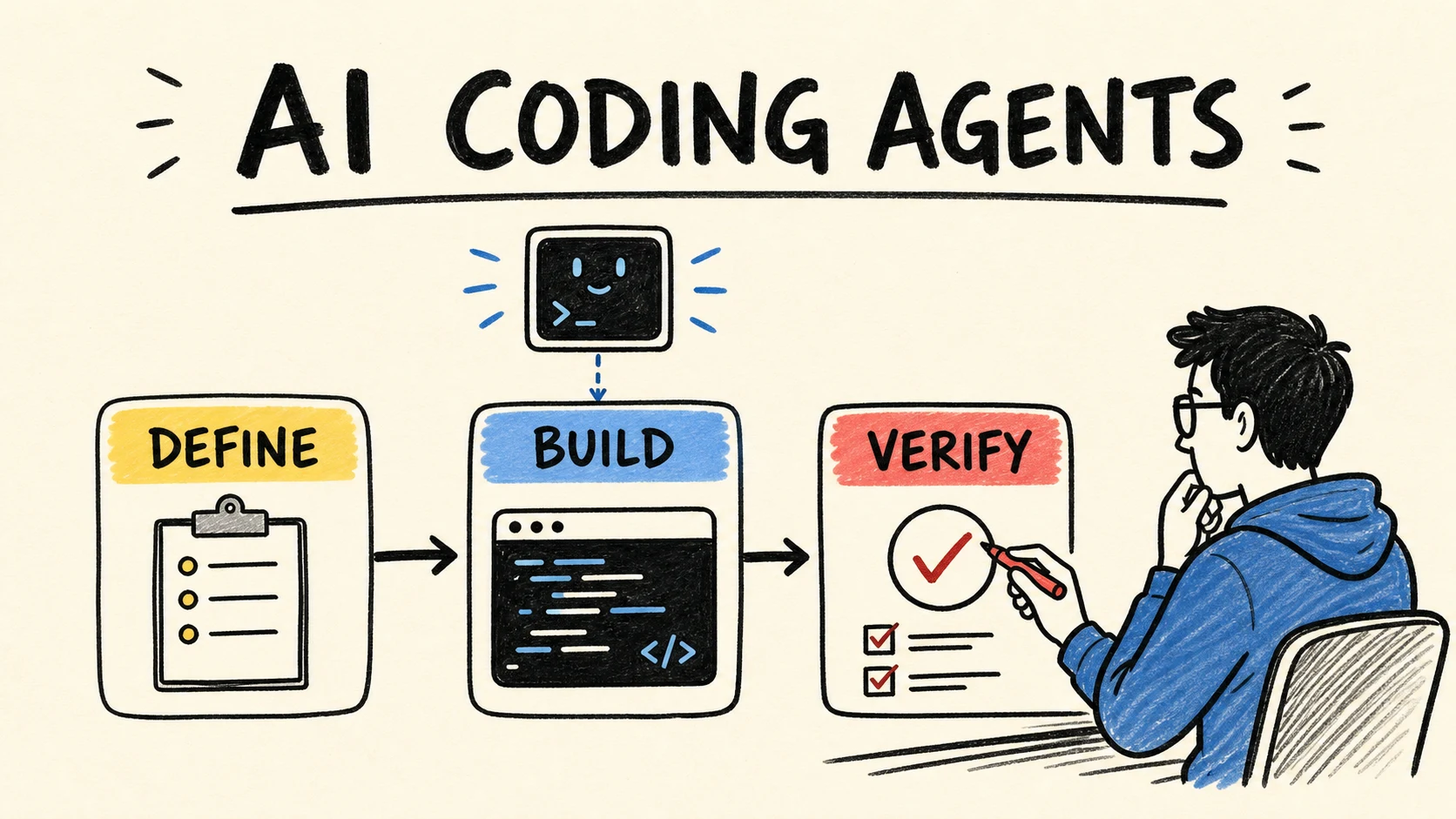
Which skill still matters when a coding agent writes the patch, runs the tests, and opens the pull request? The answer is not learning to write longer prompts. It is being able to explain the problem, limit the change, and prove that the result deserves to enter the system.
In 2025, Stack Overflow's "2025 Developer Survey: AI" found that 46% of developers distrust the accuracy of AI tools, compared with 33% who trust it. That gap changes the professional bar: producing a diff is no longer complete evidence of competence.
This article organizes the skills worth developing and the signals you can leave in a repository, pull request, or interview. The goal is not to choose between coding by hand and using agents. It is to do both with enough understanding to own the result.
Practical summary
- Software engineering still requires problem definition, architecture, and technical judgment.
- The differentiator appears in specification, bounded context, review, and verification.
- A strong portfolio shows decisions, discovered failures, and evidence, not only generated code.
- Use agents to expand your capacity without giving them responsibility for the system.
What changed in a software engineer's work?
In 2025, 52% of developers said AI tools or agents had improved their productivity, while 84% of developers using agents at work used them for software development (Stack Overflow, "2025 Developer Survey: AI"). The work moved, but the need for judgment did not disappear.
Code still matters because it is the executable form of a decision. What changes is where the effort goes. Instead of measuring maturity by lines written by hand, look at whether someone can choose a change boundary, anticipate failures, and reject a solution that merely appears to work.
OpenAI describes this shift in its account of harness engineering. The team says it had to design environments, specify intent, and build feedback loops so Codex could produce reliable work. That is an engineering description, not permission to abandon fundamentals.
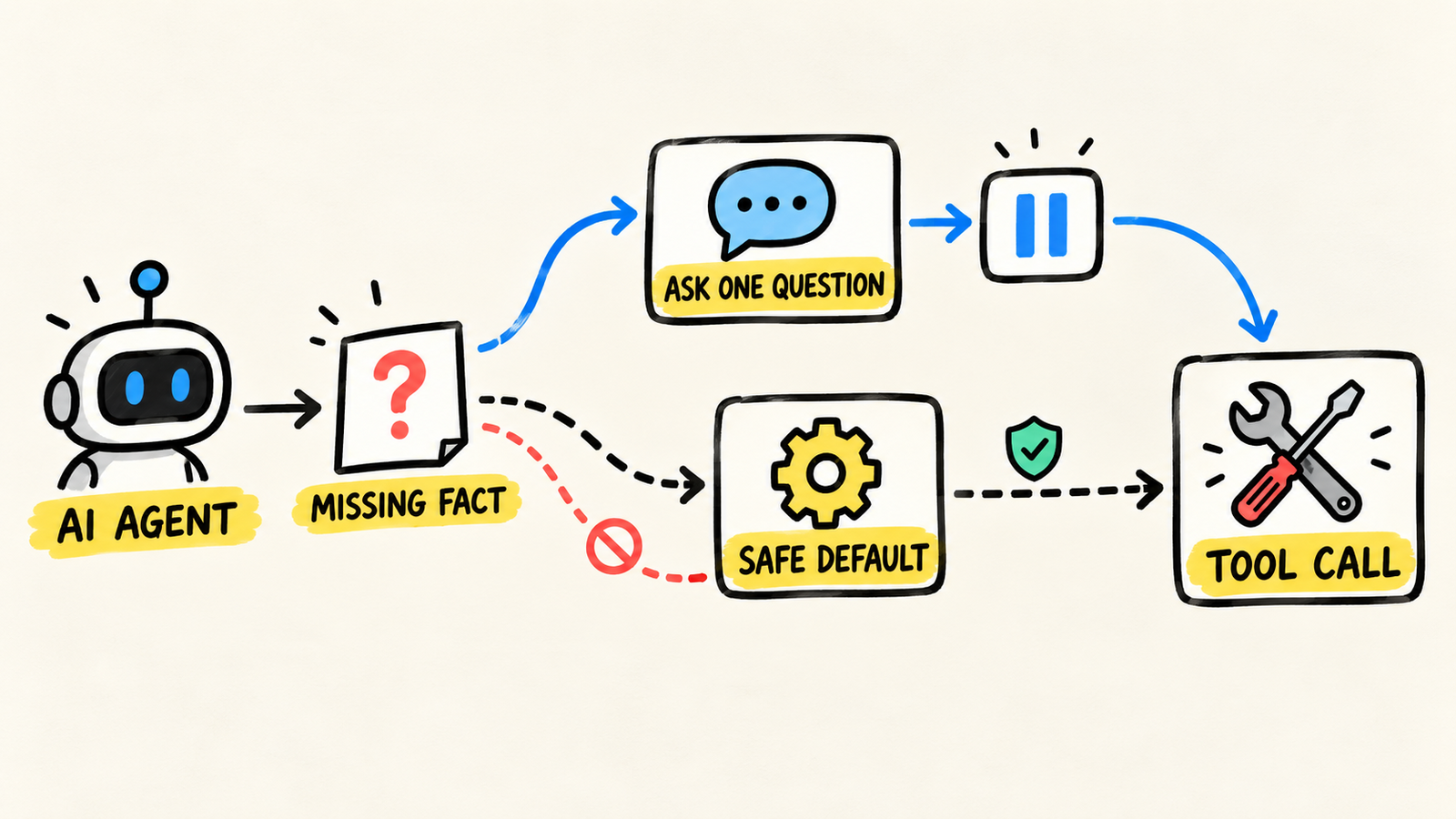
The most useful professional in this workflow is not the operator who accepts everything. It is the person who reduces ambiguity before execution and turns the agent's output into a reviewable decision.
Which skills remain a career differentiator?
In 2025, 66% of developers named AI solutions that are "almost right" as their biggest frustration, and 45% said debugging AI-generated code takes more time (Stack Overflow, "2025 Developer Survey: AI"). The durable skill is therefore not requesting any implementation, but recognizing quickly when it is wrong.
Define the problem before the prompt
Write the expected behavior, what is out of scope, the data involved, and how to verify the change. A good specification gives the agent a smaller target and gives the reviewer an independent criterion.
You can prove this skill with a short spec file, a bounded issue, or a test that fails before the patch. The document does not need to be long. It needs to make the decision visible so the code can satisfy it.
Design the system and its boundaries
An agent can suggest an API, queue, or module split. The engineer still decides about consistency, latency, security, operating cost, and compatibility with what already exists.
A small diagram and a recorded decision are worth more than a collection of prompts. For architecture in agentic systems, connect this practice to multi-agent orchestration with TypeScript, which handles state, dependencies, leases, and recovery outside the prompt.
Review and verify the output
Read the diff looking for missing behavior, weak tests, side effects, and unproven assumptions. Then run the smallest proof that can disprove the agent's hypothesis. Passing existing tests does not prove that a new change satisfies a new rule.
The academic paper "Skills for the future software profession: beyond agentic AI!", on arXiv identifies verification and validation as increasingly important when agents handle implementation. The conclusion matches practice: review is not decorative. It is where responsibility returns to a person.
How do you turn a skill into career evidence?
In 2026, OpenAI described working under a constraint that led the team to ship about a million lines of code in weeks with Codex, while also describing the environments, tools, and feedback loops that made the work possible (OpenAI, "Harness engineering: leveraging Codex in an agent-first world"). That number is the company's account, not a career target. The useful lesson is the evidence system.
A repository that demonstrates agentic maturity should let another person answer four questions without opening your chat history:
| Project evidence | What it demonstrates |
|---|---|
| Spec or issue with acceptance criteria | You can turn a need into verifiable behavior. |
| Short architecture decision | You understand trade-offs, not only the final implementation. |
| Test, eval, or verification command | You can distinguish plausible output from a correct result. |
| Pull request with residual risk and a boundary | You can communicate what has not been proven yet. |
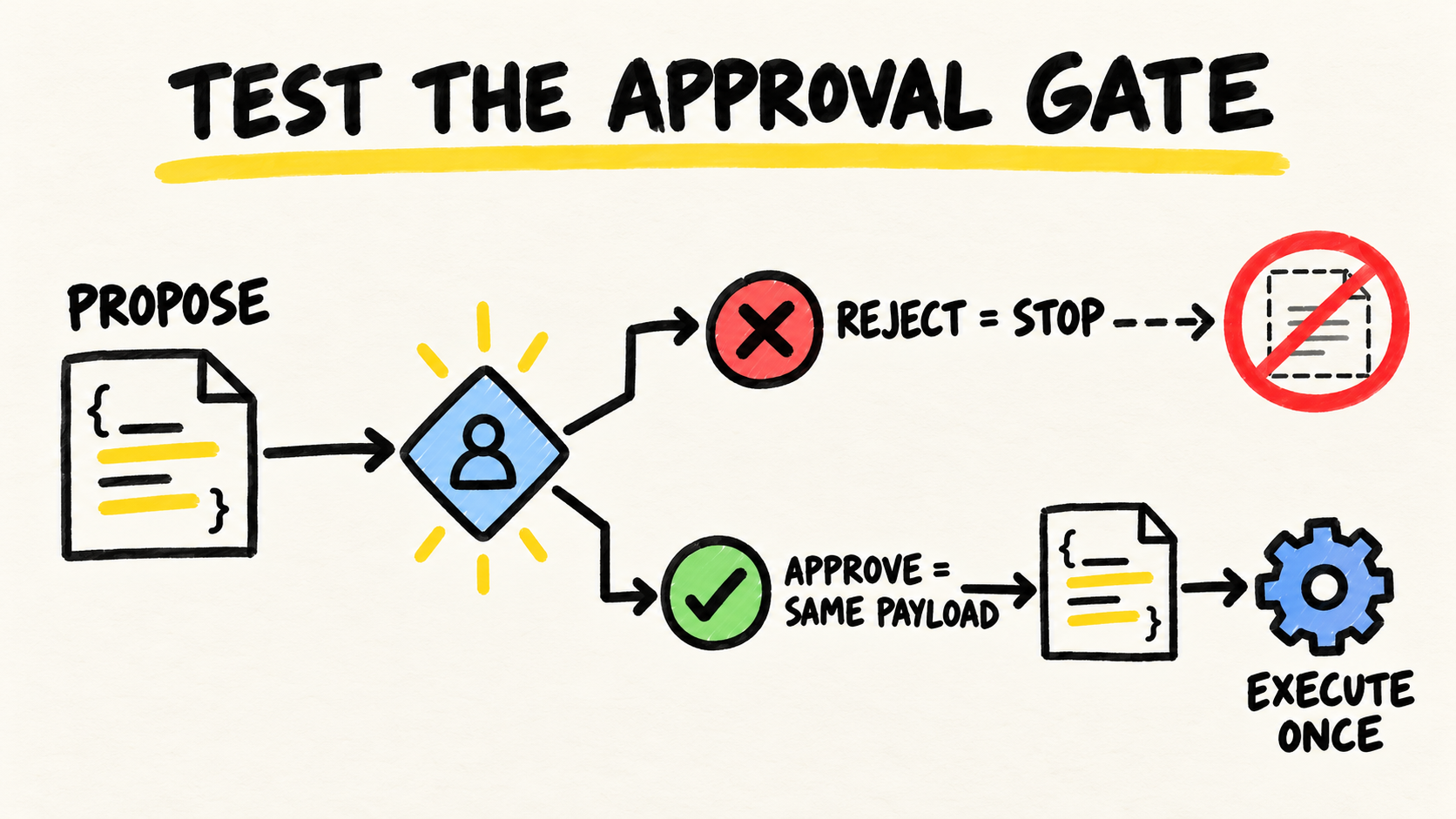
This material also improves daily work. A reviewer does not need to trust the sentence "the agent tested it." They can see which test ran, which hypothesis it covered, and which risk remains open.
To deepen this evidence, use pull request evals for coding agents in CI and agent PR review before merge. The goal is not a heavy ritual. It is making the result auditable when patch authorship is shared.
How do you use agents without outsourcing your reasoning?
In 2025, 75% of developers said they would still ask a person for help when they did not trust an AI answer (Stack Overflow, "2025 Developer Survey: AI"). The same principle applies to your own workflow: do not accept a change you could not explain without reopening the agent conversation.
Before execution, write the data flow and two failure modes from memory. After the patch, explain the diff, the reason for each changed file, and the test that should fail if the hypothesis is wrong. If you cannot do that, reduce the task or ask for an explanation before continuing.
This practice does not mean rejecting automation. It means using the agent in different roles according to risk: generator for known boilerplate, investigator for mapping a codebase, reviewer for finding counterexamples, and tutor for explaining a decision you do not yet understand.
For long loops, I use a tool I built to extend Codex and Claude Code with less repeated context when I need continuity across sessions. It reduces repeated context, but it does not replace understanding the diff or turn an unverified output into evidence.
The dependency signal is simple: if the agent disappeared for an hour, could you still locate the problem, formulate the next test, and explain the solution design? If not, your next investment is fundamentals, not a more elaborate prompt.
Which fundamentals deserve deliberate practice?
In 2025, 87% of developers reported concerns about agent accuracy and 81% about data security and privacy (Stack Overflow, "2025 Developer Survey: AI"). Fundamentals help you evaluate those boundaries when the output looks convincing.
Practice code reading, data modeling, concurrency, networking, testing, security, and observability on small problems. The goal is not to compete with an agent's typing speed. It is to build a mental model that lets you predict a failure before it becomes an incident.
Choose a domain where decisions have operational consequences as well. It might be payments, queues, authentication, search, databases, or infrastructure. Domain knowledge helps you notice when a technically elegant solution violates a business rule or a production limit.
Close the loop with real signals: context engineering for coding agents, agent observability in CI, and codebase RAG that helps an agent ask the right question. An agent can retrieve context. You still decide which context deserves trust.
How can you organize a practice plan for the coming months?
In 2025, 72% of developers said they do not vibe code at work, and another 5% emphatically said it is not part of their professional workflow (Stack Overflow, "2025 Developer Survey: AI"). That does not prove the label is good or bad. It shows room for more disciplined use of agents.
Build a cycle that produces reviewable artifacts. The study loop for coding agents turns that idea into practice without requiring manual authorship of every line:
- Choose a small change and write the expected behavior before opening the agent.
- Ask for investigation and a plan, not immediate implementation. Check the files, dependencies, and risks it identifies.
- Let the agent change a narrow boundary. If the diff grows without a reason, stop and split the task.
- Run tests or evals that can fail for different reasons. Record the evidence and residual risk.
- Explain the decision to another person or write a short note. If the explanation stays vague, return to the previous step.
After a few iterations, your portfolio will contain more convincing material than a gallery of screens: specifications, decisions, tests, failures, and fixes. It shows that you can work with agents without confusing speed with quality.
The plan works for a team too. A lead can evaluate the quality of the contract, context, and verification without measuring how many tokens someone spent or how many lines the model wrote.
Frequently asked questions about careers and coding agents
Do I need to stop coding by hand to stay relevant?
No. In 2025, Stack Overflow recorded that 46% of developers distrust AI accuracy. Manual practice remains useful for fluency, debugging without assistance, and testing your own hypotheses. Use the agent to extend the work, but keep sessions where you design and implement small parts without delegating the reasoning.
Is prompt engineering the most important skill?
Not by itself. In 2025, 66% of developers were frustrated by AI solutions that were almost right. A clear prompt helps, but it cannot replace specification, architecture, context, testing, and review. The professional skill is building a loop that turns intent into a verifiable change.
How can I show agent experience in an interview?
Bring an example containing the problem, decision, diff, test, and discovered failure. In 2025, 75% of developers said they would still ask a person for help when they did not trust AI. Explain where you distrusted the output and how you reduced uncertainty. That story demonstrates judgment better than a flashy prompt.
What if my company does not use coding agents yet?
The skills still apply. In 2025, 52% of developers said AI or agents improved their productivity, but that data does not require immediate adoption. Specification, system design, code review, testing, and operations are useful with or without an agent. Learn the tool in small personal projects.
The market may change the tool name, model, or agent interface. The work still needs someone who can say what should be built, limit the path, and prove that the system works. That is the part of the career worth carrying to the next runtime.
Sources consulted
- Stack Overflow, "2025 Developer Survey: AI", retrieved 2026-07-26, https://survey.stackoverflow.co/2025/ai
- OpenAI, "Harness engineering: leveraging Codex in an agent-first world", retrieved 2026-07-26, https://openai.com/index/harness-engineering/
- arXiv, "Skills for the future software profession: beyond agentic AI!", retrieved 2026-07-26, https://arxiv.org/abs/2606.21894