
Codebase RAG for coding agents is not the same as embedding every file. The practical work is deciding which signal changes the next edit: exact search, symbol, dependency, history, test, or external document. Without that choice, the agent spends tokens and still edits with false confidence.
In 2025, Cursor measured 12.5% higher average accuracy when its agent had semantic search in addition to grep (Cursor, "Improving agent with semantic search", 2025). The useful conclusion is not "use vectors for everything." It is that agents need a retrieval layer that chooses the right tool for the right question.
Operational definition: Codebase RAG is the flow that retrieves snippets, symbols, history, and test evidence before the agent edits. It works well only when each result has a clear reason, scope, and validity.
Practical summary
- Semantic search helps, but grep remains better for names, flags, and exact errors.
- Symbols, references, and history reduce architectural guessing in large codebases.
- MCP should expose retrieval with scope, logs, and review.
- The PR should show which context was used and which test closed the change.
Why did codebase RAG become urgent for agents?
In 2025, DORA reported 90% AI adoption among software professionals and a median of two daily hours of use (Google, "How are developers using AI? Inside our 2025 DORA report", 2025). Codebase RAG became urgent because the bottleneck moved from AI access to verifiable context.
An agent editing a backend, queue, API, or pipeline must understand local invariants. A model may know TypeScript, but it does not automatically know that your service uses an outbox, that an event is idempotent, or that a migration needs a feature flag. That knowledge lives in code, tests, history, and internal docs.
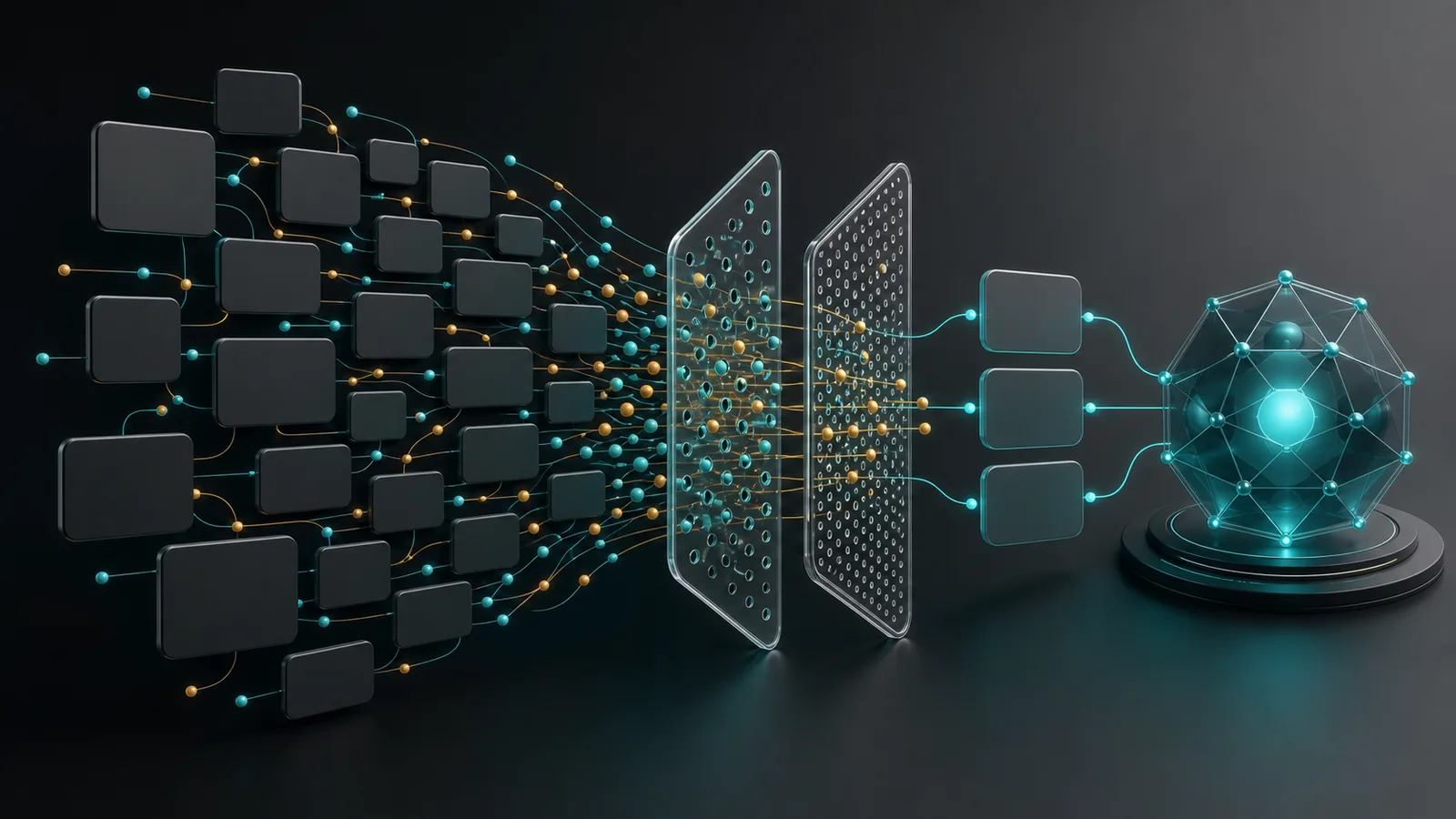
The mistake is using the context window as storage. The more files enter without a reason, the harder it becomes to audit why the patch happened. A better flow retrieves small evidence, records origin, and makes the PR explain the path.
This continues the line from context engineering for coding agents and context budgets for Claude Code and Codex. Here, the focus is the search layer that feeds the agent before editing.
Citable capsule: Codebase RAG is a selection layer, not a file dump. With 90% AI adoption in software in the 2025 DORA report, the value is in retrieving short, traceable evidence that is sufficient to guide the next patch.
When is grep better than semantic search?
In 2025, Cursor said its agent uses grep heavily alongside semantic search and that the combination leads to the best outcomes (Cursor, "Improving agent with semantic search", 2025). Grep wins when the question contains an identifier, error, route, flag, or exact name.
Lexical search is cheap for confirmation. If CI failed with SessionExpiredError, search for that name. If the issue mentions an environment variable, search for the variable. If the patch touches authentication, search the exact middleware before asking the agent to infer the architecture.
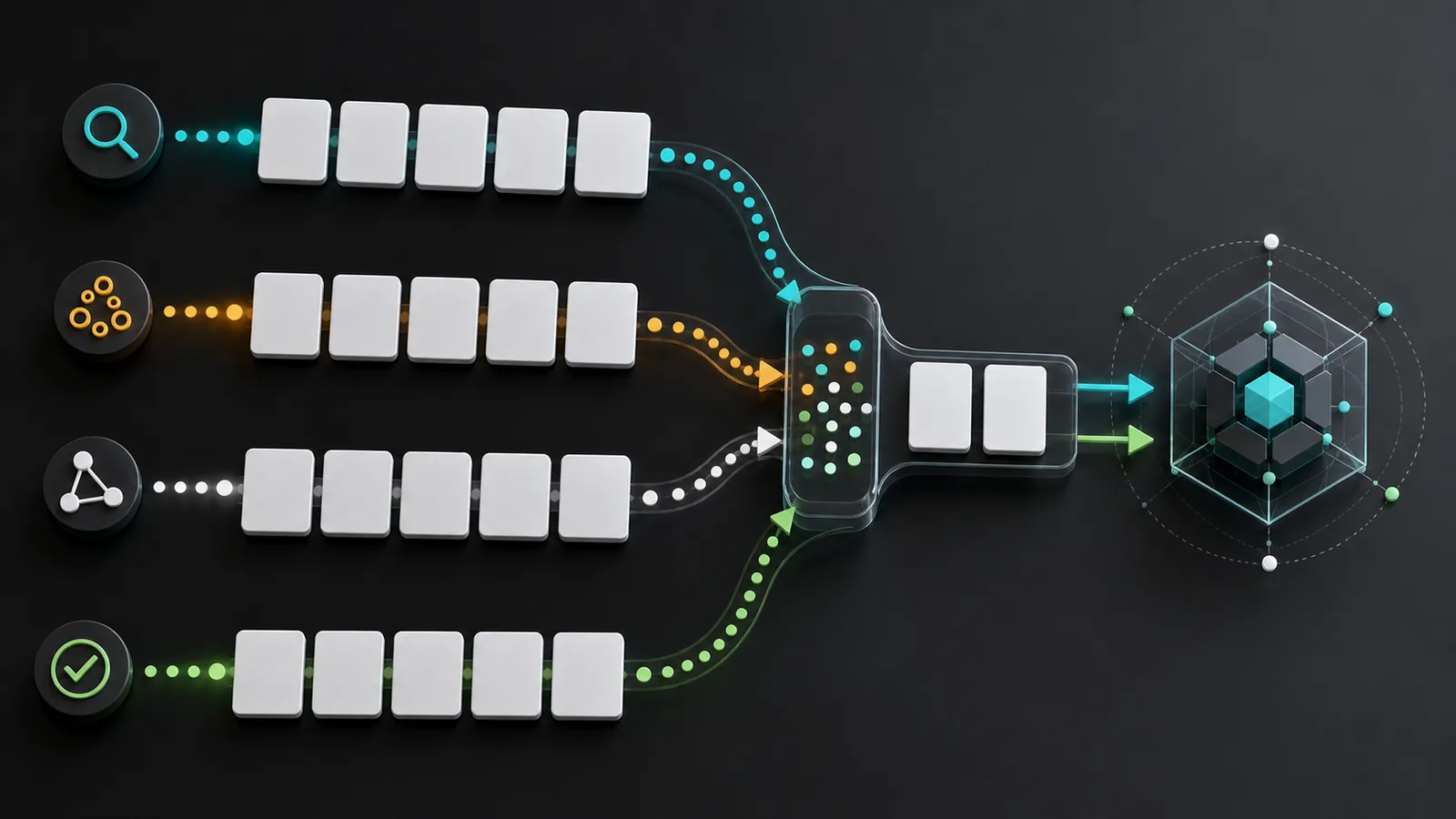
Semantic search enters when the question describes intent. "Where do we renew sessions?", "which layer applies rate limits?", and "what retry pattern do we use?" may not match the real names. In that case, embeddings help find conceptually close snippets.
| Agent question | First retrieval | Minimum proof |
|---|---|---|
| Named error, function, route, or flag | Grep or exact search | File and line where it appears. |
| Local concept without a known name | Semantic search | Small snippet with role in the flow. |
| Public API or exported type | Symbol search | Definition and main references. |
| Behavioral regression | Test and history | Case that fails before the patch. |
Citable capsule: Grep is not obsolete for coding agents. Cursor measured gains with semantic search, but also stated that grep and semantic search together lead to the best outcomes; good retrieval uses exact search for names and semantic search for intent.
Where do symbols, graph, and history fit?
In 2026, GitHub documented symbol: search based on Tree-sitter, with no extra build setup required (GitHub Docs, "Understanding GitHub Code Search syntax", 2026). Symbols fit when the agent needs definition, usage, and impact.
Embeddings can approximate meaning, but they do not replace precise navigation. If the agent will change calculateInvoiceTotal, it needs to know who calls it, which tests cover it, what public contract exists, and whether another package depends on it. For that question, symbols and references beat textual similarity.
SCIP defines itself as a language-agnostic protocol for indexing source code and powering navigation such as go to definition, find references, and find implementations (SCIP, "Code Intelligence Protocol", 2026). This index family is useful because it brings the agent closer to how an engineer works in an IDE.
History closes the gap. A file may look strange because it preserves compatibility with an old client, a prior incident, or an unfinished migration. When the agent skips history, it tends to "clean up" the detail that kept production stable.
Citable capsule: Symbols, graph, and history reduce guessing in codebase RAG. GitHub Code Search exposes symbol search, and SCIP standardizes indexes for definitions and references; these signals show real impact before an agentic edit.
How do you expose retrieval through MCP without invisible permission?
In 2025, the MCP specification defined the protocol as a way to connect LLM applications to external sources and tools (Model Context Protocol, "Specification 2025-11-25", 2025). For codebase RAG, MCP is useful when it exposes search, files, references, and history with clear scope.
The risk is turning retrieval into broad permission. An MCP server that can read any repository, branch, ticket, and secret creates a surface the reviewer cannot see. The allowlist deserves the same seriousness as shell, network, and credentials.
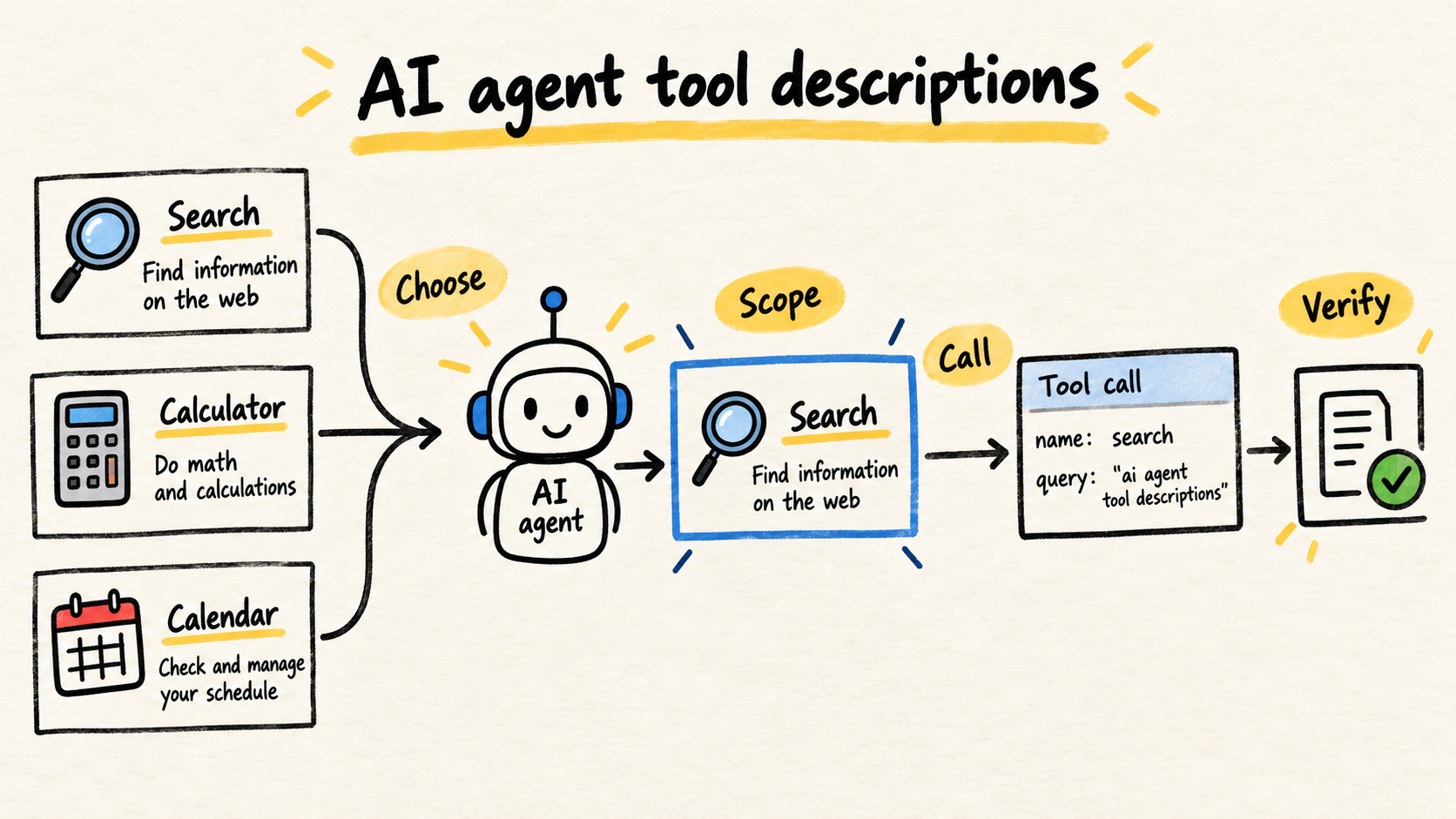
Sourcegraph describes its MCP as a layer for search, navigation, history, diffs, and code intelligence across repositories (Sourcegraph, "MCP Server", 2026). That kind of capability helps agents when each call leaves a trace: tool, query, origin, returned snippet, and reason for use.
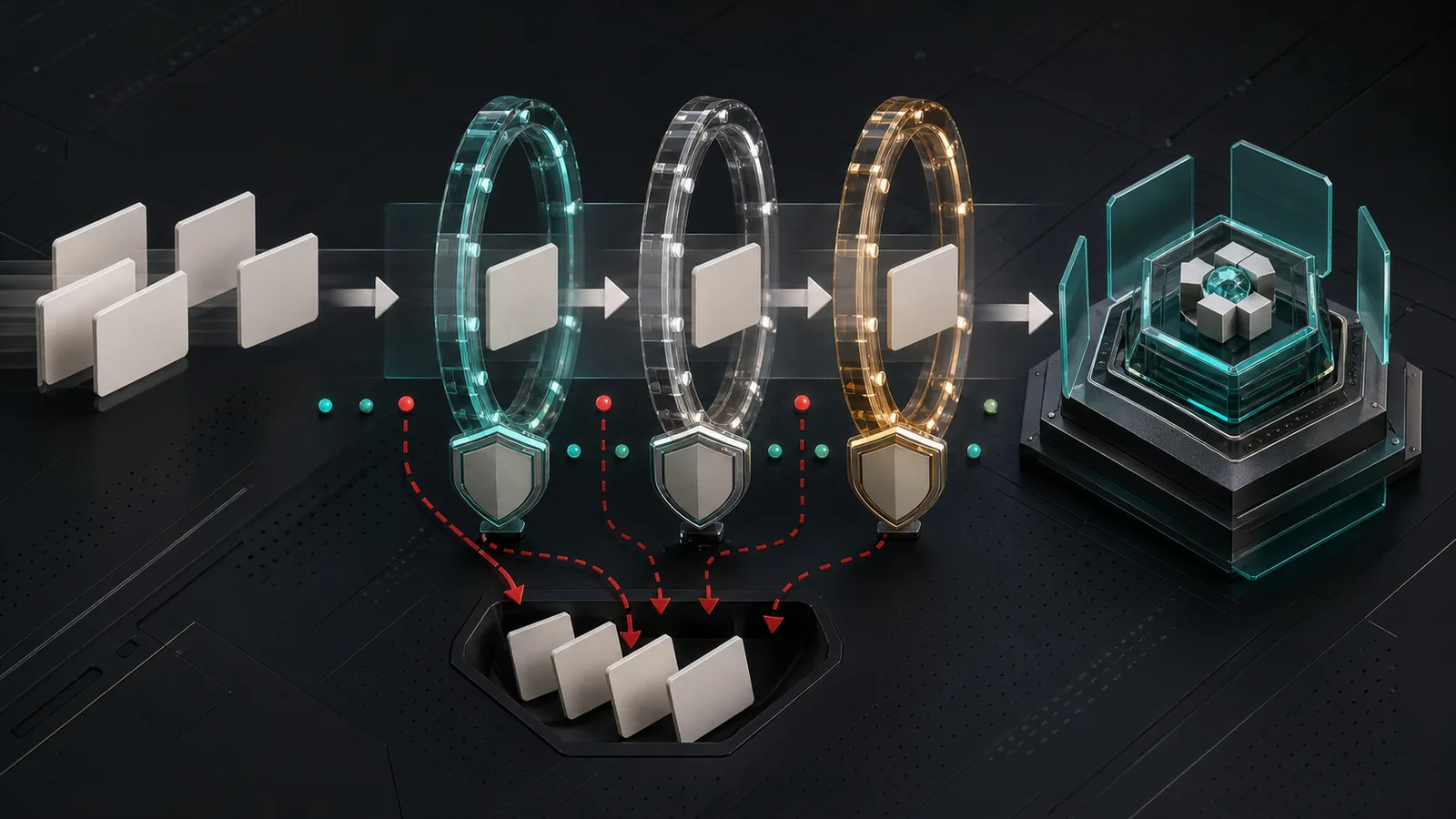
For long loops, I use RemoteCode as my own tool for helping Claude Code and Codex go further with less repeated context when a task needs to alternate between retrieval, subagents, and verification without loading raw history every round.
This connects directly to MCP allowlists for coding agents. Codebase RAG through MCP should start read-only, log every query, and block tool expansion by default.
Citable capsule: MCP for codebase RAG should expose retrieval with scope and logs. The MCP specification standardizes connections to external tools; in code, that requires allowlists, auditable origin, and review for any permission expansion.
How do you measure whether retrieved context helped the PR?
In 2026, GitHub reported that Copilot code review had passed 60 million reviews and accounted for more than one in five code reviews on GitHub (GitHub Blog, "60 million Copilot code reviews and counting", 2026). Measuring context is now part of review.
The PR should show which evidence entered the agent. It does not need a transcript dump. It needs relevant searches, opened files, consulted symbols, tests run, and the decision made. If evidence did not change the patch, it does not belong in the PR body.
The same GitHub article says its agentic review architecture, with context retrieval and repository exploration, delivered an initial 8.1% increase in positive feedback. That suggests a simple team metric: good context increases useful findings and reduces noisy comments.
For agent-generated PRs, combine three signals: whether the patch survives review, how many back-and-forth comments come from missing context, and whether CI failures came from out-of-scope changes. If RAG does not improve those signals, it may only be making the conversation more expensive.
Citable capsule: Codebase RAG must be measured in the PR. GitHub reported more than 60 million Copilot reviews and an initial 8.1% gain in positive feedback after agentic context retrieval; the same principle applies to patches generated by agents.
What is the smallest architecture to implement this week?
In 2026, GitLab reported that 43% of respondents cannot reliably distinguish AI-generated code from human-written code in their own codebase (GitLab, "AI Accountability Report", 2026). The minimum architecture must record origin, intent, and proof.
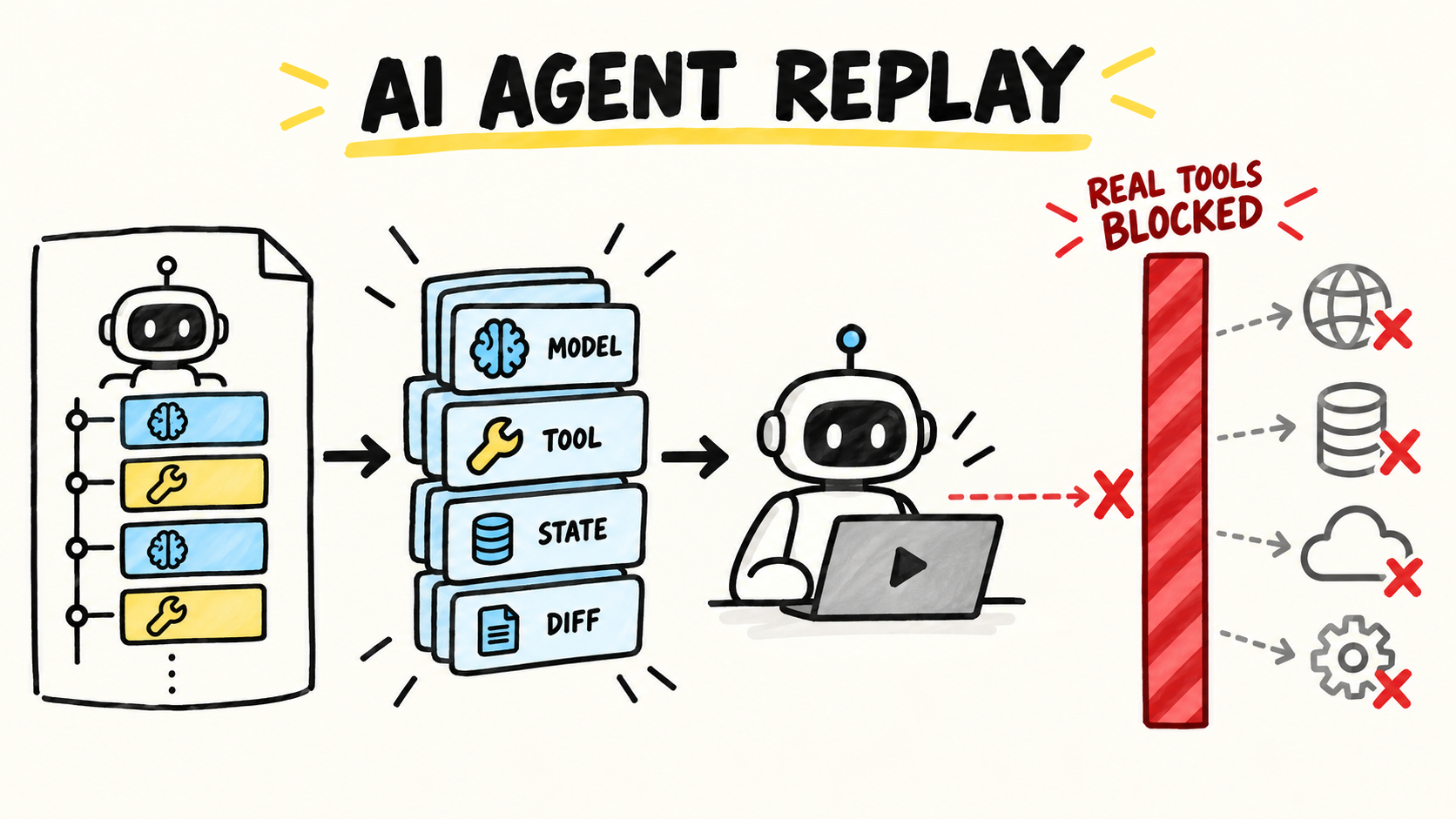
Start with four layers. The first is versioned guidance in AGENTS.md, CLAUDE.md, or an equivalent file. Codex docs say Codex reads AGENTS.md before working and builds an instruction chain by scope (OpenAI, "Custom instructions with AGENTS.md", 2026).
The second layer is local search. Combine grep, symbol search, and small file ranges. The third is semantic search or MCP for conceptual questions and external context. The fourth is evidence: test, lint, typecheck, reviewed diff, and source of context.
Practical experience: in my experience testing this pattern on backend tasks, the gain came from limiting the agent's first response. Instead of asking it to "read the repo", the flow asked for one hypothesis, two context sources, and one verification command.
Subagents fit when retrieval can run in parallel. Codex docs cite codebase exploration as a good subagent case, and Claude Code docs describe subagents for specialized workflows and better context management (OpenAI, "Subagents", 2026; Anthropic, "Create custom subagents", 2026).
Citable capsule: A minimum RAG architecture for agents has versioned guidance, local search, semantic or MCP retrieval, and PR evidence. GitLab shows AI code origin is still hard to trace; each context item used by the agent needs a record.
Frequently asked questions about codebase RAG
Does semantic search replace grep in coding agents?
No. In 2025, Cursor measured 12.5% higher average accuracy with semantic search, but also said grep and semantic search together produce the best outcomes (Cursor, "Improving agent with semantic search", 2025). Use grep for exact names and semantic search for intent.
Do I need MCP for codebase RAG?
Not always. In 2025, the MCP specification defined integration with tools and external sources, but local search can cover smaller repositories (Model Context Protocol, 2025). Use MCP when context lives outside the workspace or needs a shared index.
How do I stop the agent from receiving too much context?
Measure what entered. In 2025, DORA reported a median of two daily hours of AI use among software professionals (Google, DORA 2025). The more frequent the use, the more important it is to limit file, snippet, reason, and validity.
Should reviewers trust the agent's RAG?
Not without proof. In 2025, Stack Overflow found that 46% of developers distrust AI tool accuracy, versus 33% who trust it (Stack Overflow Developer Survey, 2025). The PR should expose evidence, command, and residual risk.
Closing
Codebase RAG helps when it becomes engineering discipline. The agent does not need to "understand everything." It needs to find the smallest evidence that changes the next decision and prove that this evidence was enough.
Start small: grep for names, symbols for impact, semantic search for intent, MCP for external context, and tests to close the change. When the PR shows those signals, the reviewer stops auditing the agent's imagination and starts reviewing an evidence chain.
Sources consulted
- Cursor, "Improving agent with semantic search", retrieved 2026-07-17, https://cursor.com/blog/semsearch
- GitHub Blog, "60 million Copilot code reviews and counting", retrieved 2026-07-17, https://github.blog/ai-and-ml/github-copilot/60-million-copilot-code-reviews-and-counting/
- GitLab, "GitLab Research Reveals Organizations Are Generating AI Code Faster Than They Can Control It", retrieved 2026-07-17, https://about.gitlab.com/press/releases/2026-06-23-gitlab-research-reveals-organizations-are-generating-ai-code-faster-than-they-can-control-it/
- Stack Overflow, "2025 Developer Survey: AI", retrieved 2026-07-17, https://survey.stackoverflow.co/2025/ai
- Google, "How are developers using AI? Inside our 2025 DORA report", retrieved 2026-07-17, https://blog.google/innovation-and-ai/technology/developers-tools/dora-report-2025/
- OpenAI, "Custom instructions with AGENTS.md", retrieved 2026-07-17, https://developers.openai.com/codex/agent-configuration/agents-md
- OpenAI, "Best practices", retrieved 2026-07-17, https://developers.openai.com/codex/learn/best-practices
- OpenAI, "Subagents", retrieved 2026-07-17, https://developers.openai.com/codex/subagents
- Anthropic, "Create custom subagents", retrieved 2026-07-17, https://docs.anthropic.com/en/docs/claude-code/sub-agents
- Model Context Protocol, "Specification 2025-11-25", retrieved 2026-07-17, https://modelcontextprotocol.io/specification/2025-11-25
- Sourcegraph, "MCP Server", retrieved 2026-07-17, https://sourcegraph.com/mcp
- SCIP, "Code Intelligence Protocol", retrieved 2026-07-17, https://github.com/scip-code/scip